What to Do If You Find a Swift
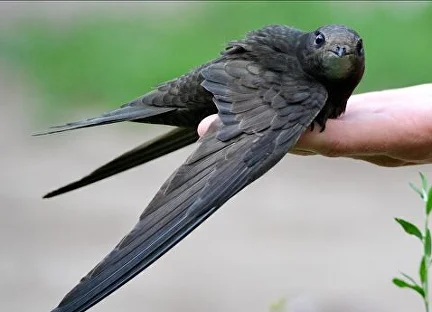
Do not rush to release a swift you have found. Try to understand what may have happened to make it end up on the ground.
And above all, NEVER throw it into the air. This is a common myth! A healthy bird can take off from the ground without any problem. Swifts have very strong wings, and by pushing off the ground with wingbeats, a swift easily gains height.
If you throw an injured or weakened bird into the air, you may cause irreparable harm. It has happened many times that birds suffered additional head injuries or worsened already damaged bones. Do not do this!
Milder cases: the bird has no visible injuries and is not fluffed up.
Sometimes swifts simply miss their course and fly into your room or onto your balcony. As a rule, if there has been no contact with your pets that could have harmed it, the bird can be examined and, if there are no injuries, released during daylight hours.
To do this, go to an open area, place it on the palm of your raised hand, and wait. The bird will look around and fly away on its own. If it does not fly away, there is a reason. For example, if it is fluffed up, it feels unwell or is in pain.
Bad weather
Sometimes the weather turns against them, especially in May, and there are sudden, prolonged cold spells.
In low temperatures, swifts cannot find enough food. These swifts are found on balconies, stairwells, or simply sitting helplessly on surfaces.
Traumatic brain injury
The bird may have struck something hard, and this is a serious condition. - Symptoms: any head tremor, apathy, blood from the beak or ears, seizures.
Shine a flashlight into the bird's eyes: the pupils should constrict equally. - Important warning: if you suspect a traumatic brain injury, do not force water into the bird, as this can lead to complications and death.
Place the bird in a cardboard box with ventilation holes, lining the bottom with tissues.
What to do next depends greatly on its condition, so you need to contact volunteers.
Cat bites
If a swift has been bitten by a cat, it urgently needs an antibiotic. This is necessary because if it is infected with pasteurella, death can occur within a few hours.
Initial check for injuries
Carefully examine the swift: - The wings should be symmetrical, and there should be no blood or stuck-together feathers. Hold the swift's body with one hand, and with the other open the wing and inspect it carefully. Take a video. To do this, place the swift on the floor and make it walk. If you contact volunteers, experienced people may be able to identify the problem from the wing position and advise you. The video should be of normal quality and not taken in the dark.
- If there are no visible injuries, you can test the swift by turning it onto its back. To do this, wash your hands thoroughly or put on gloves, as we try not to soil the feathers with skin oils. Then gently turn the swift onto its back and remove your hands, trying not to catch on its claws.
Normally, it should quickly turn itself back over.
Struggling or being unable to return to its normal position is a symptom of a serious injury. This can indicate a bruise, injuries to the shoulder girdle, or sometimes a traumatic brain injury.
Try to record a video, as it will give specialists more information about the nature of the injury.
Secondary examination of the swift's body
Part the feathers on the chest and back to check whether there is any blood or any wounds.
Severe bruising is often difficult to distinguish from internal injuries, and it requires treatment.
Weighing the bird
Try to weigh the bird. This is a very important indicator of its condition. - Tip: if you do not have kitchen scales, you can weigh the swift in a box at a shop, then remove the bird and see the weight of the box. The difference is the swift's weight. - If the weight is below the normal 38-42 grams, you need to begin warming and feeding it on a schedule. Once body weight is restored and the weather is good, these birds return to the wild. If the adult swift you found is not underweight, there is no need to try to feed it at any cost during the first 24 hours. Finding insects (and swifts eat only them) can take some time, especially during the season.