Assessment and First Steps
This site was created to help volunteers rescuing swifts (Apus apus)
In Estonia, this is Eesti Metsloomaühing (opens in a new window)
The site contains naturalistic photographs, including insects, their body parts, medical procedures, etc.
What a common swift looks like (Apus apus)
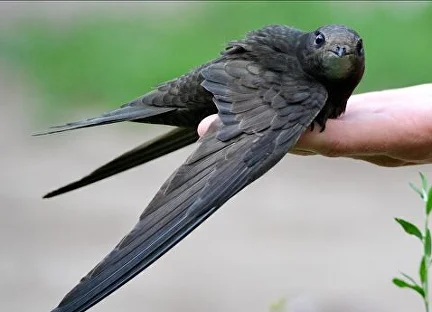
A swift is a small bird, about the size of a palm, dark brown and almost uniformly colored, with a small white patch under the beak and dark brown bead-like eyes. The wings are long and sickle-shaped; in an adult bird they extend about 3.5 centimeters beyond the tail. Normal weight is 38-43 grams.
An adult bird has dark feet, and all four toes on each foot point forward (unlike a swallow); they have long, sharp claws.
If a swift is on the ground, it needs help
If you have found an adult swift (without pale edging on the feathers) and it has no obvious injuries, you can pick it up and hold it on your outstretched hand in an open area, without tossing it. Try this over soft ground, so that if the bird falls, it does not injure itself even more.
It may already have recovered and be able to fly away. If it does not fly off, it needs help, and you need a cardboard box to put the bird in.
The next step is to contact Eesti Metsloomaühing
Chick
Swifts do not have fledglings on the ground, which means adult birds never continue feeding their grown chicks on the ground.
If a chick has come into your care, go straight to the special section, time matters.
If you still have doubts, here is an illustrated guide to identifying a bird's age by day
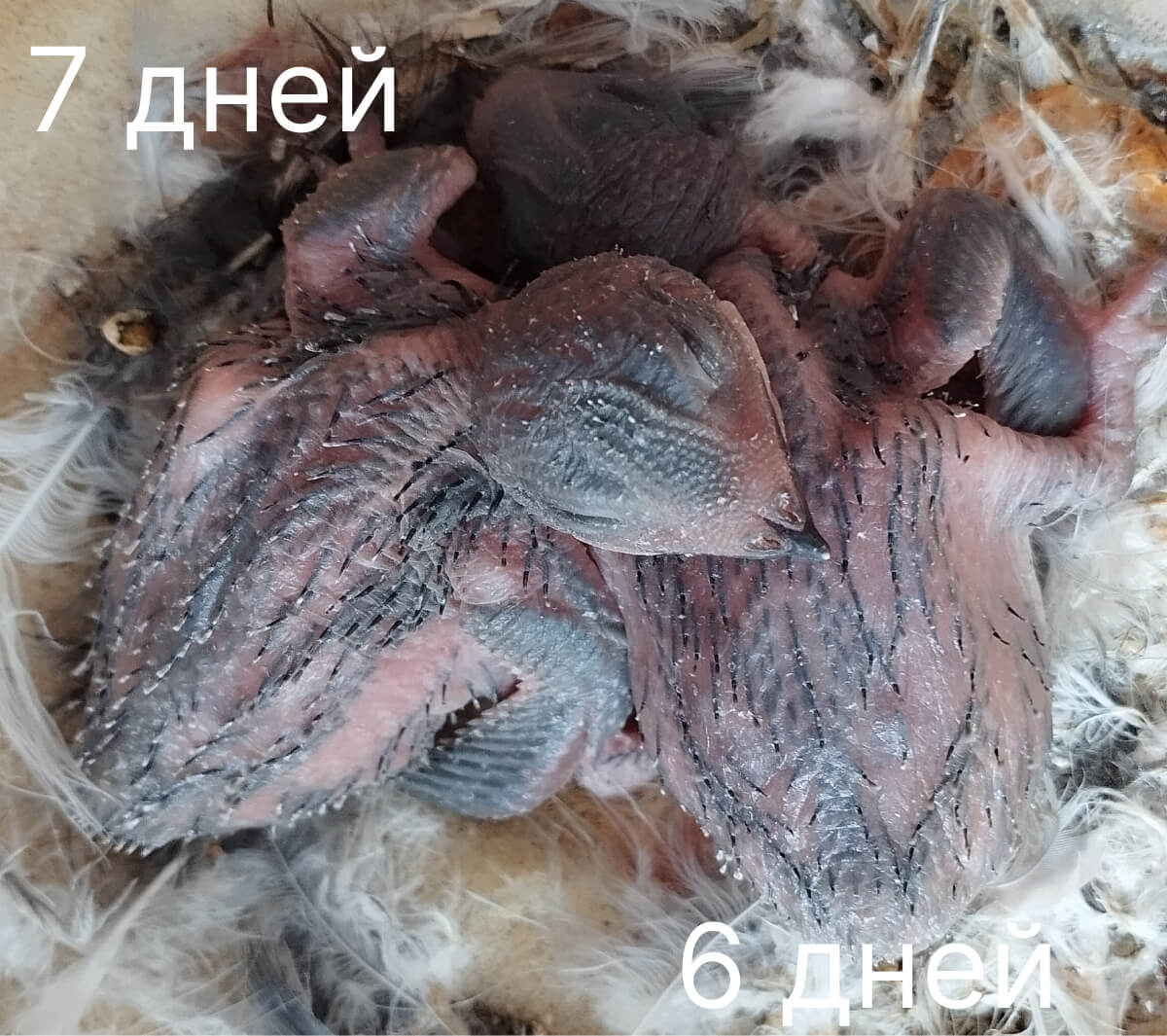
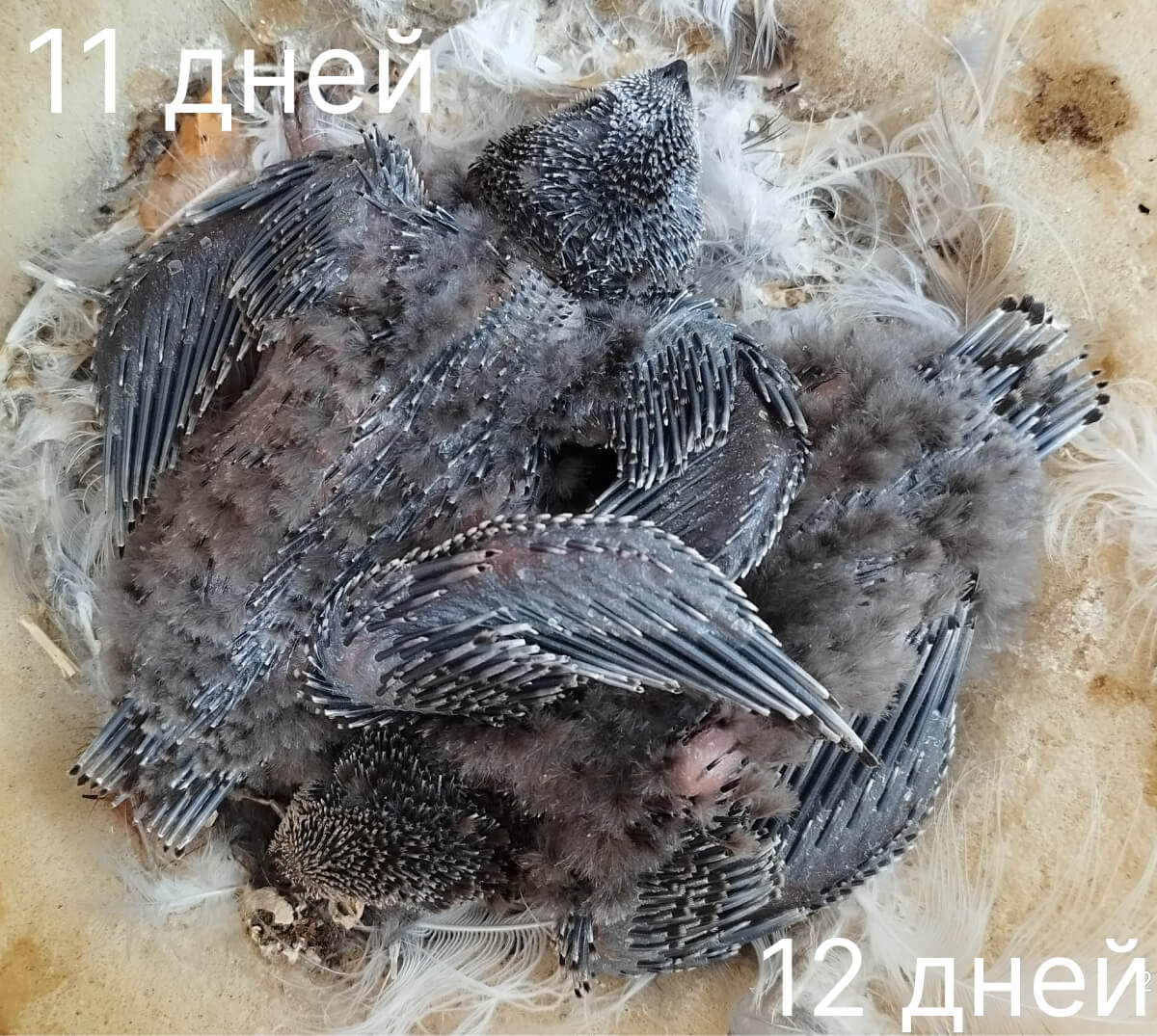
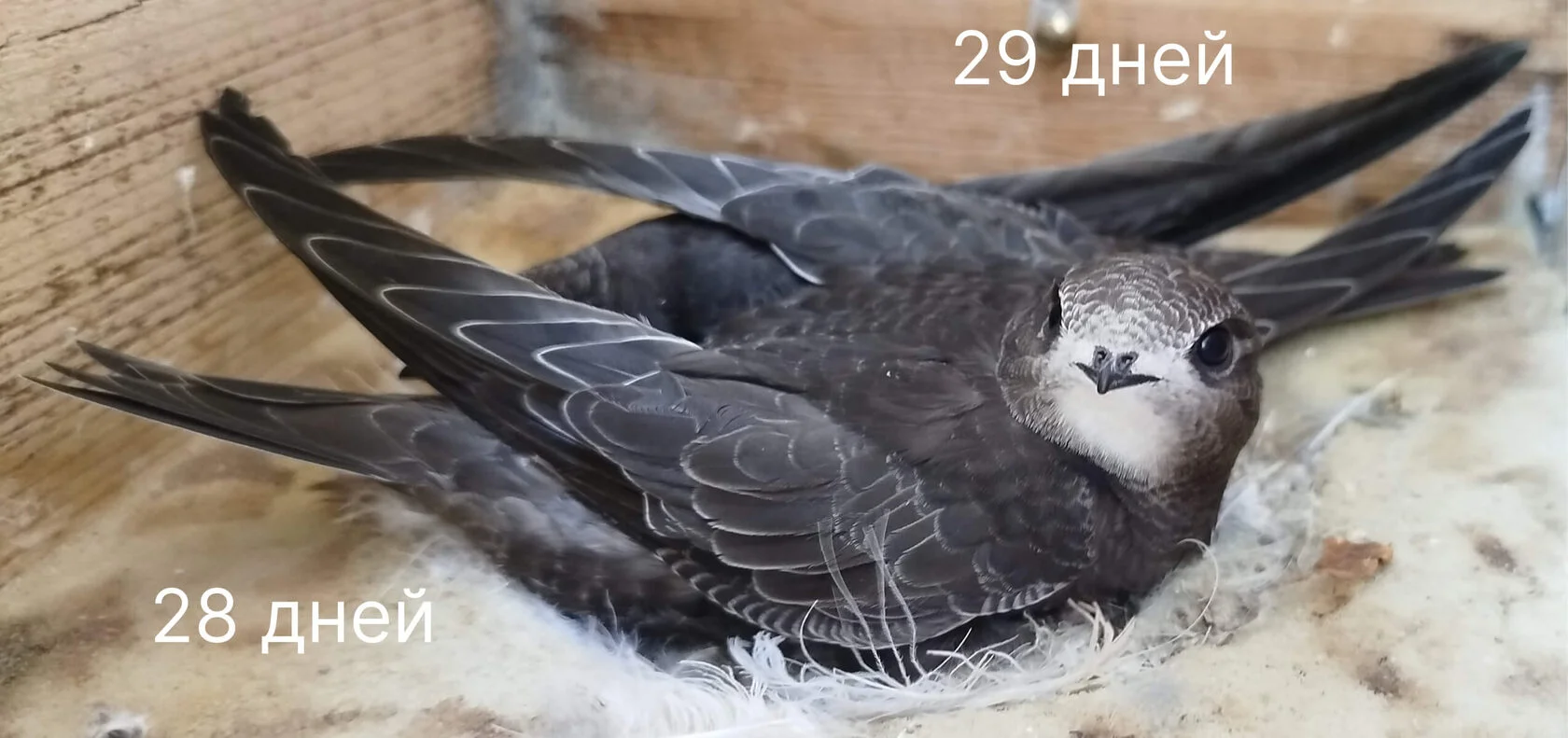
Adult bird
Emergencies
- Severe emaciation.
Signs: for a chick, weight below 25 grams; for an adult bird, below 35 grams.
The swift needs external warming, and you need to start following the protocol for recovery from emaciation; the swift may not have the strength to digest even appropriate food.
- Cat bite - an urgent vet visit is required to get a course of antibiotics for pasteurella.
For example, Ciprofloxacin for an adult swift, Amoxicillin/clavulanate for a chick. Ciprofloxacin may affect feather growth, so it is usually avoided in chicks.
Safe housing for a swift
A cage is completely unsuitable for a swift; it is unsafe and damages feathers.
Find a box the size of a shoebox or larger (a swift's wingspan is about 45 cm), and make ventilation holes from the inside outward. A basin or any plastic container covered with cloth clipped in place also works. Put dry paper napkins on the bottom, without fragrance or dyes.
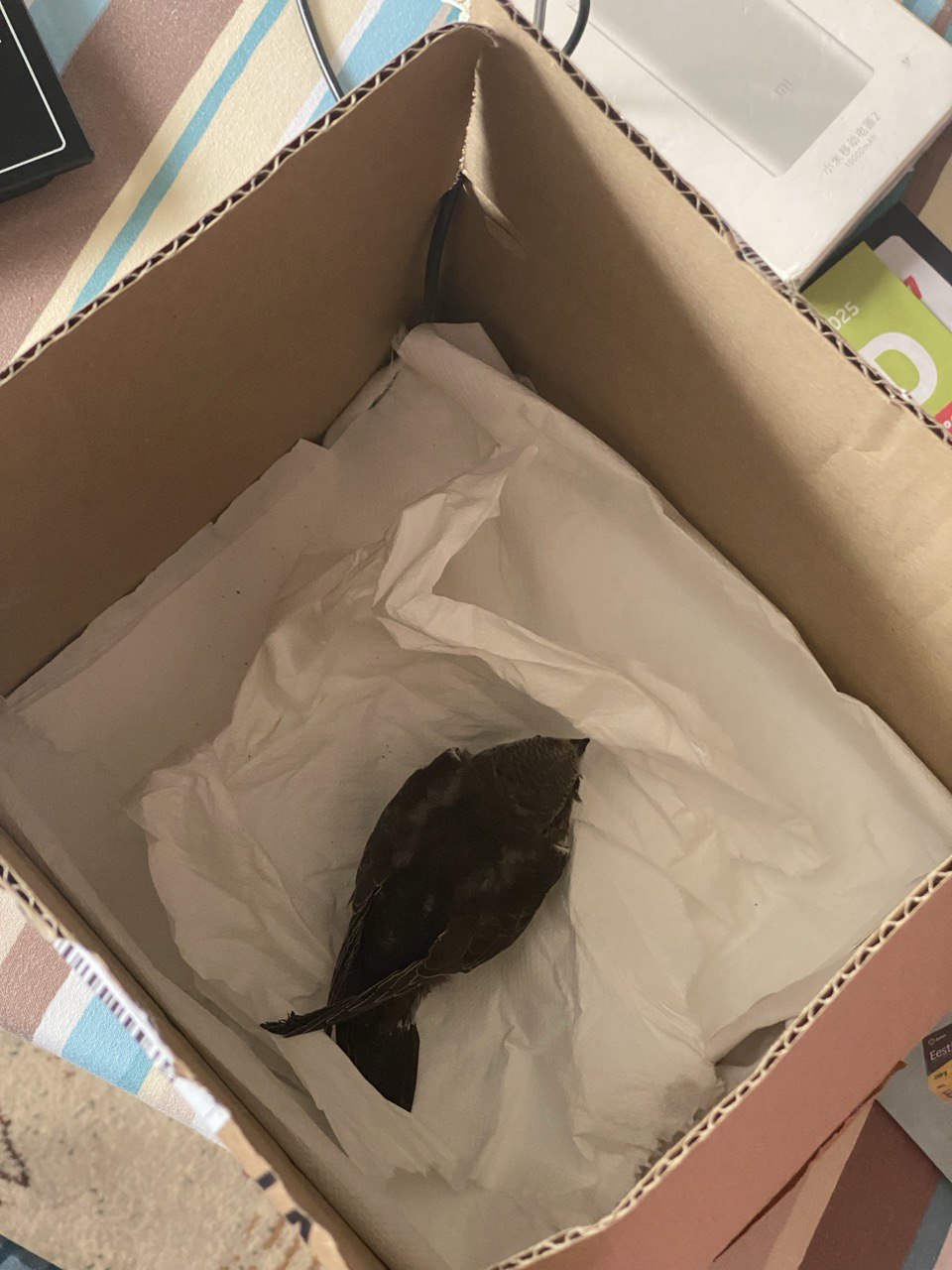
Place the bird in a darkened spot so it stays calm.
Do not be afraid to move the swift into a box. Even if the swift hisses at you, it will not peck you. Be careful with its claws; it can grip very hard, for example by catching onto your finger.
There is no need to put straw, any food, or a dish of water into the box, because a swift does not know how to peck. Napkins or soft cloth without threads that the bird's claws cannot get tangled in, ventilation in the box, a warm bottle for heat, and rest are enough. Napkins make it easy to remove droppings from the box.
To return to the wild, a swift must have perfect plumage: clean and complete. Handle the swift in clean gloves or wrapped in cloth. Do not try to feed the bird inappropriate food: swifts are strictly insectivorous.
Many people have pets; do not let that stop you from helping the bird. Place the box with the swift out of their reach, for example on top of or inside a cabinet.
Weight and emaciation
Weight is a very important indicator of the bird's condition. If you do not have kitchen scales, you can weigh the swift in a box at a store, then remove it and note the weight of the box. The difference will be the weight of the swift. It is better to have kitchen scales at home so you can track changes in the swift's condition (especially for a chick).
If the weight is below the normal 38-43 grams, warming and scheduled feeding must be started. Once body mass is restored and the weather is good, these birds return to the wild. If the adult swift you found is not underweight, do not try to feed it at any cost during the first 24 hours; it has reserves.
With severe emaciation, it is important to restore digestion gradually and gently, using insect extract
Other sections of the site:
- Secondary assessment
- Signs of emaciation
- Criteria for readiness for release
- Placing a chick in a foster nest
Special instructions for chicks
Very often chicks come to you already dehydrated and noticeably emaciated. You need to act quickly to bring the bird out of this condition with minimal consequences.
The life-critical weight for a chick is 22-18 grams. Emaciated swift chicks usually weigh 20-27 grams.