Releasing a fully grown swift chick
This page covers the release of fully fledged chicks. Guidance for injured adult birds will be added separately.
In the wild, a swift chick leaves the nest fully grown and fully formed at 40-45 days after hatching. If a person has raised the chick, this rule does not change. You do not try to "teach" it to fly before it is ready. Swift chicks train their muscles in the nest by flapping their wings, doing push-ups, and arching their backs. This evolved that way because a swift chick gets only one chance at a successful or unsuccessful first flight. Trying to launch a swift chick before it is ready is just as stressful for it as falling out of the nest.
Flight feathers and tail feathers
The main criterion for readiness to fly is fully grown primary flight feathers and tail feathers.
The sheaths from which the feathers grow are hidden under the small feathers on the inner side of the wing. Do not try to "help" the swift shed these sheaths. This can damage the feather.
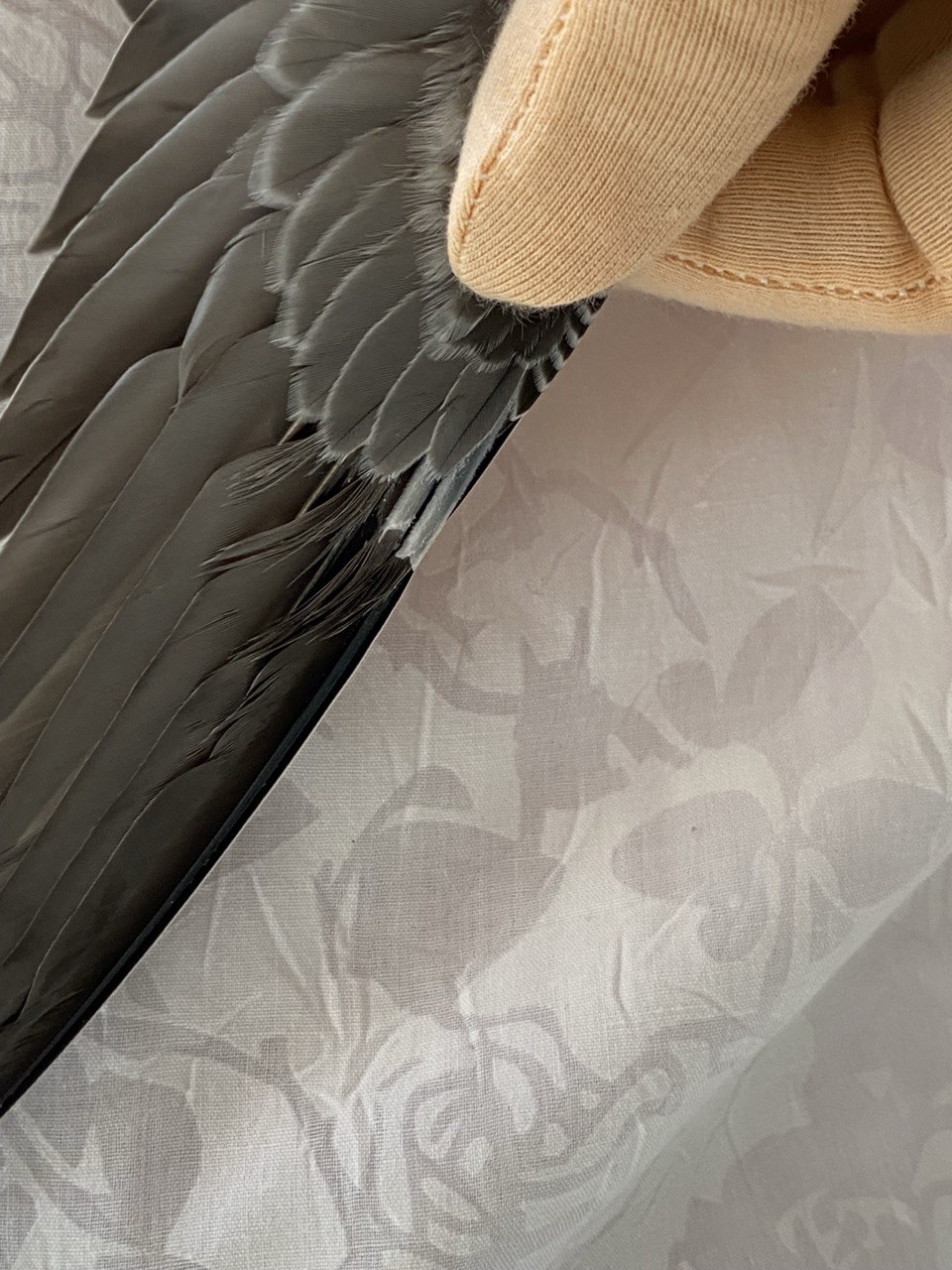
A common mistake made by volunteers is failing to notice that feather growth is still ongoing.
Wing length relative to the tail, or wing length measured from the shoulder, can only serve as a guideline and is not a criterion of readiness for release. The most important thing is that the bird has completely finished growing, including the feathers.
A mature, fully grown feather emerges directly from the skin (from the feather follicle, which is not visible to the eye). A growing feather emerges from a visible sheath, which the bird removes on its own once the feather is ready. The shaft of a feather that is still growing has a blood supply; the shaft of a mature feather no longer does.
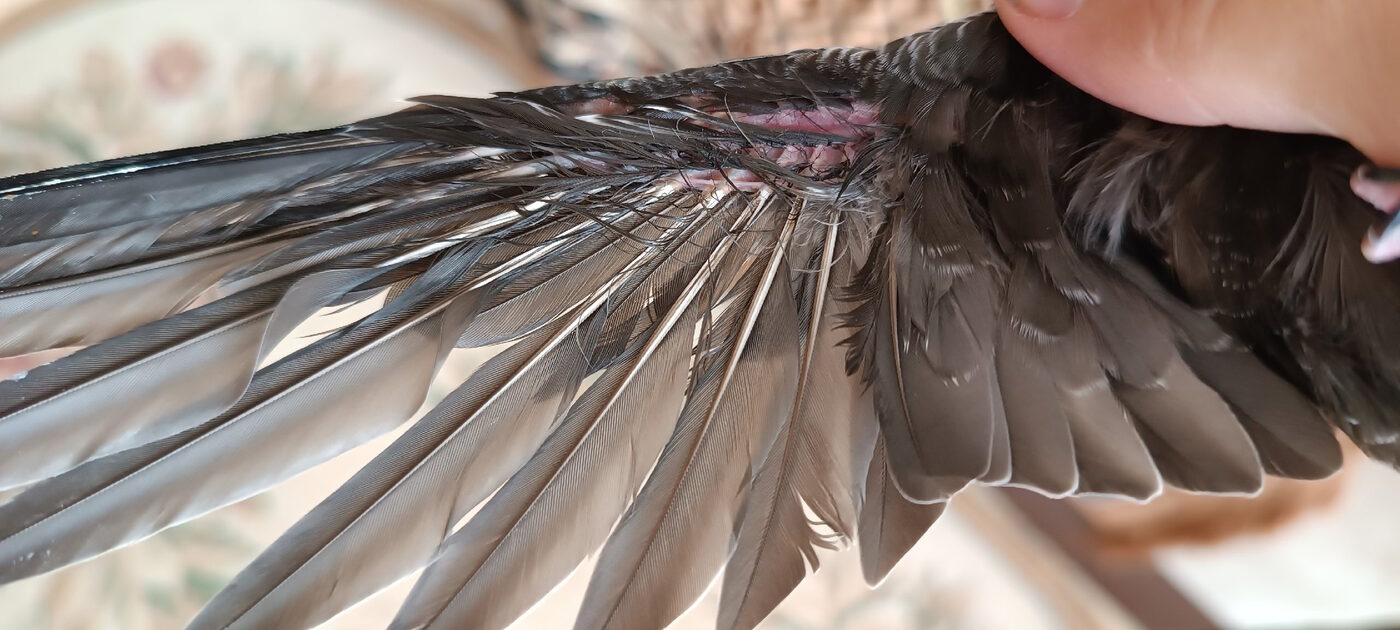
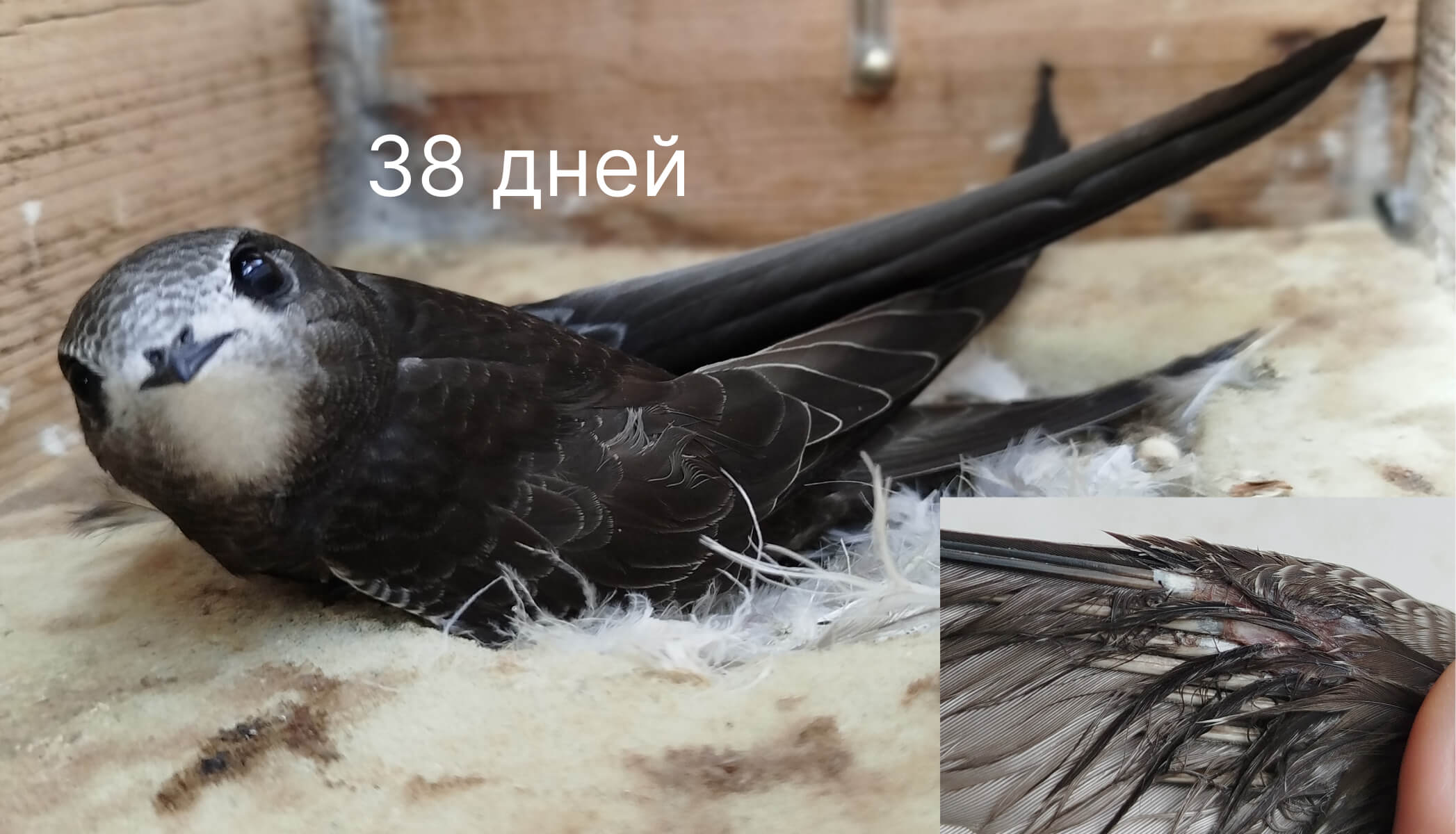
To check whether the sheaths are gone, wet the coverts above the flight feathers with water so that you can see the place on the bird's body where the feathers are growing from. The coverts do not get fully wet right away, so you may need to wet them several times.
Swift chicks that leave the nest too early drop to the ground because they cannot sustain a long flight. If a volunteer releases a bird that is not ready to fly, it may cover meters or even kilometers before becoming exhausted from the premature strain and ending up as prey on the ground.
Flight weight
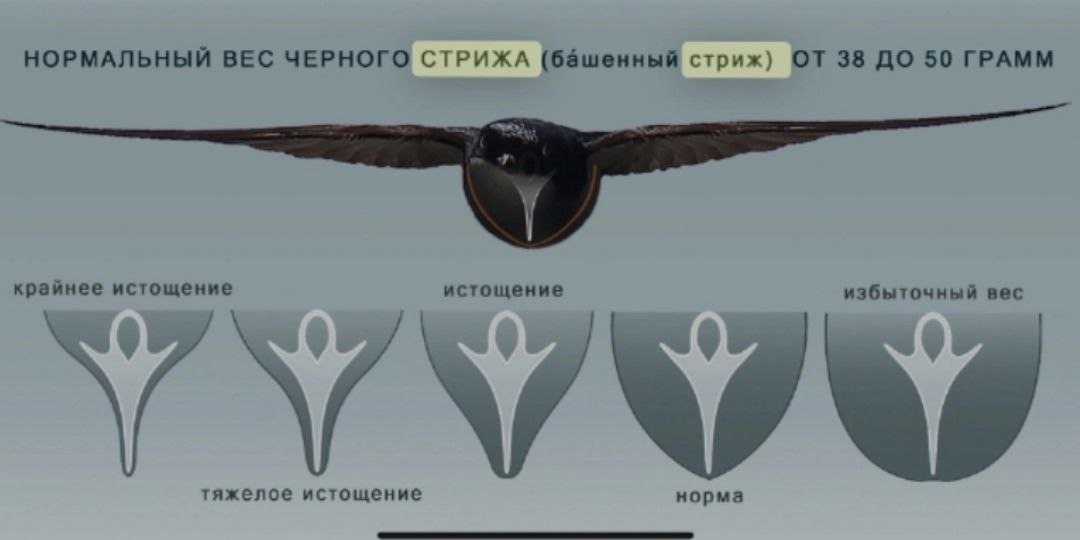
The second important criterion is weight. A chick older than 20 days (already feathered) normally weighs more than an adult bird. Its weight decreases at the same time as feather growth finishes: fat tissue is replaced by muscle. In the last 1-2 weeks before fledging, a swift can be difficult to feed, but it is important to maintain its weight so that strong endurance muscles can develop.
A swift's flight weight ranges from 37 grams for small individuals to 45 grams for large ones. The standard weight is 40 grams. An overweight bird struggles to lift itself into the air, while an underweight one lacks sufficient muscle strength. If you have little experience with swifts, this image will help you assess body condition in case you happen to have a particularly large or particularly small chick.
Checking feather quality
Once it leaves the nest, a swift's home is the sky. Swifts do not return to nests; they even sleep in flight. The wing feathers fold into a continuous aerodynamic surface, and so do the tail feathers. Photograph the fully spread wing and the fully spread tail against a light background from each side, then examine the photo closely. If you fed the swift insects and followed feeding intervals appropriate to its age, you will most likely see dense, elastic feather tissue with strong, straight, evenly coloured shafts.
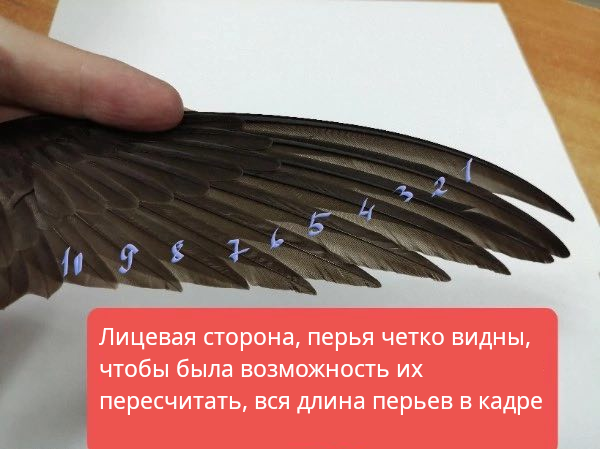
Chicks often come into human care exhausted and starved, and this deficiency may show on the feathers as so-called stress lines or stress bars. With improper feeding, the feathers will be loose, less dense, and brittle. Such a bird will not survive long in the wild.
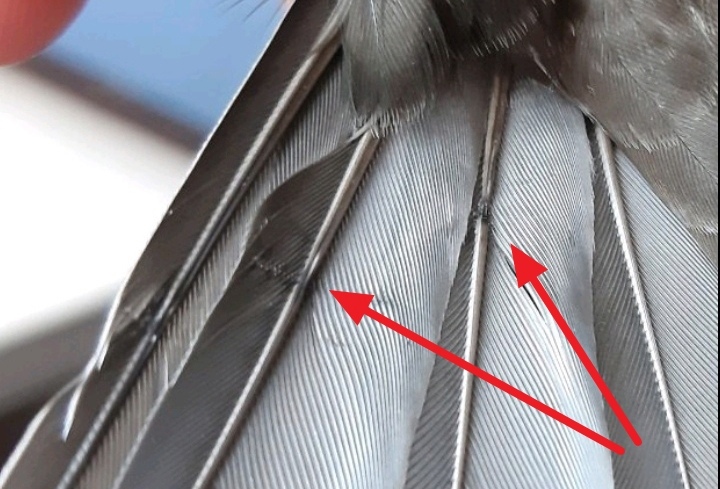
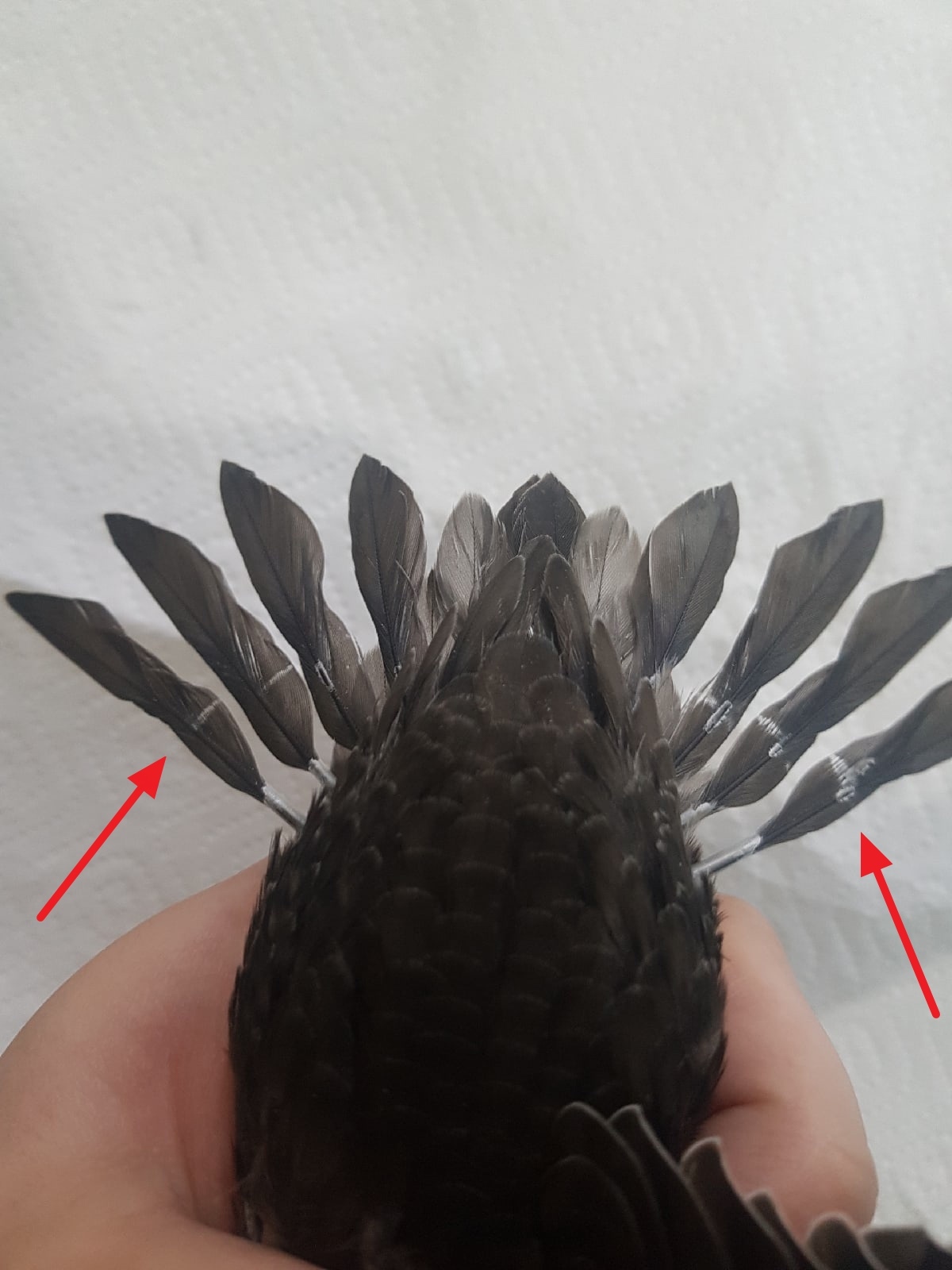
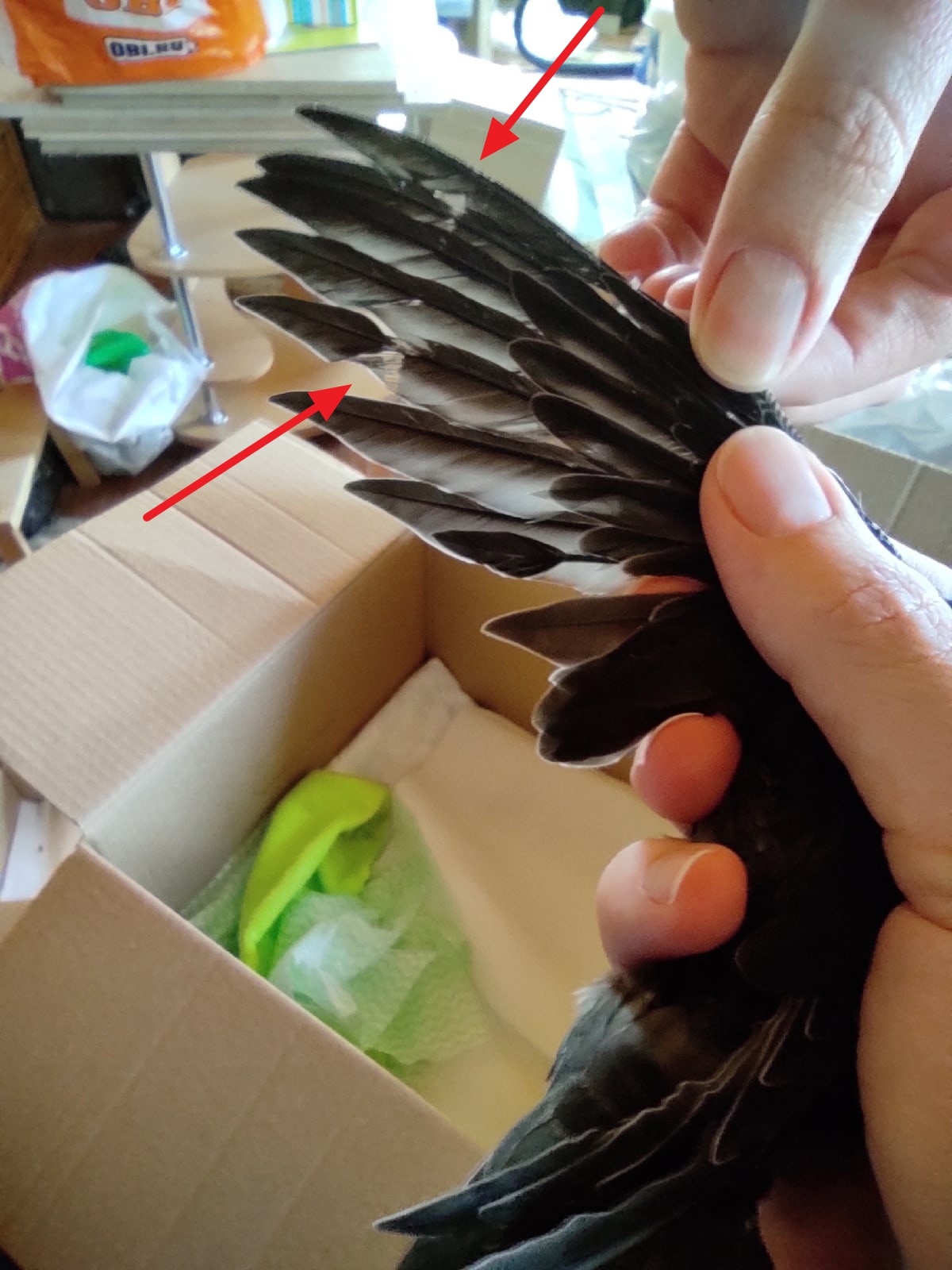
If you notice that some primary flight feathers or tail feathers are missing, check whether a new feather is growing from the skin in that spot. If it is, it is better to let the swift finish growing it before release. The outermost three primary feathers on the wing and the outermost three tail feathers are especially critical.
Preparing for release
So, if your swift chick has finished growing its feathers and has reached flight weight, make sure it is completely clean before release. Tail feathers or feet may sometimes be soiled with droppings. In that case, clean them with a wet cotton pad. If you need to soak and clean the tail heavily, do not release the swift that day; postpone release until tomorrow. It needs time to reapply its water-repellent feather oils.
Time and place of release
In the wild, ready swift chicks leave the nest in the evening or at night. Choose an evening time as well, when daytime predators have already eaten and are not hunting as actively. It is best if there is still enough light for you to find the bird in the grass if something goes wrong.
The release site should be open, easy to survey, and free of nearby hazards such as large reflective surfaces, wires, highways, and so on. If the swift falls, it should land in grass, not on asphalt. A school sports field, an open field, or a large meadow are suitable places.
Weather
Do not release a swift in windy weather or during a thunderstorm. Ideally, it should be a warm clear day or a day with partial cloud cover.
If you are releasing late chicks at the very end of summer, check that nighttime temperatures are not below 9°, otherwise there will be no food for the chick in the air, and it will struggle to maintain body temperature.
It is important to check the weather forecast to see whether a warm corridor is expected from the release site toward southern regions so that the swift can travel along it.
Releasing the swift chick
Place the bird on your palm and raise your hand. Do not toss it up or wave your arm. It needs time, because it has a lot to do. It scans the surroundings for predators and for sheltered places they might emerge from. It also needs to orient itself to the wind direction (they usually choose to start into the wind) and warm up its muscles by vibrating. If the swift chick is looking around and trembling or "humming" with its body, it is about to fly.
If you are holding it calmly on your outstretched hand and it does not fly off, there is a reason. You can try putting it back in the box, moving to another spot some distance away, and offering it another chance to start. If it still does not fly, postpone the release until the next day or try a completely different release site.
Additional information
Imprinting does not work in swifts the way it does in many other birds. They therefore do not need any extra rewilding or training to live in a flock. No cases have been recorded of a swift returning to "its" person.
Excerpt from a scientific article
Dina Safonovna Lyuleeva also notes in her work:
— While checking nests, we often encountered young birds that looked fully adult but stubbornly remained in the nest even after repeated disturbance. The reason was that the outer primary feathers had almost completely unfurled, but at the base of the 10th to 7th primary feathers there were still visible incompletely opened sheaths no more than 3-5 mm long, or casings up to 2 mm. The delay of such young swifts was especially surprising late in the departure period, when the main mass of Common Swifts had already left the breeding area. Such behaviour in young swifts is understandable, since it is known that once they leave the nest they immediately become independent and are able to obtain food without support from adults. Thus, the wings of young birds must be completely unfurled, corresponding to the wings of adult swifts, which are always capable of prolonged and manoeuvrable flight. The fact that the wing plumage, especially the outer primaries forming the wingtip (10th to 8th), is particularly durable is confirmed every year by the absence of moult in one-year-old Common Swifts, which replace their primary feathers almost exactly one year after leaving the nest. It is known that in some cases second-calendar-year swifts also do not manage to replace the outermost primary feather during the pre-breeding moult, and it remains until the following wintering period.