Exhaustion
Details on how to identify exhaustion in a swift and what to do if it is present. Practical recommendations and advice from experienced swift rescuers on how to nurse an exhausted swift back to health. Everything written below applies equally to adults and chicks. Differences will be noted separately.
Skip the signs of exhaustion and go straight to the resuscitation section
If a swift is exhausted, you must not feed it immediately as if it were healthy. Do not give large amounts of food! Otherwise the stomach will fail, and the swift will die.
For a healthy, non-exhausted chick, see the Table of the required amount of food for one swift chick
Determining the degree of exhaustion
What we do next depends on how severely the swift is exhausted
Breast condition
In the center of the breast there is a bone that runs in an arc from the neck to the belly. This is the keel. Slightly wet the feathers on the breast with warm water and part them with your fingers. What does the keel look like? Are the sides of the breastbone rounded, with the breast itself shaped like a U? Or are they flat, with the breastbone shaped like a V? (a sharp angle) Or is the breastbone like a thin plank, shaped like a Y or I?
Weight
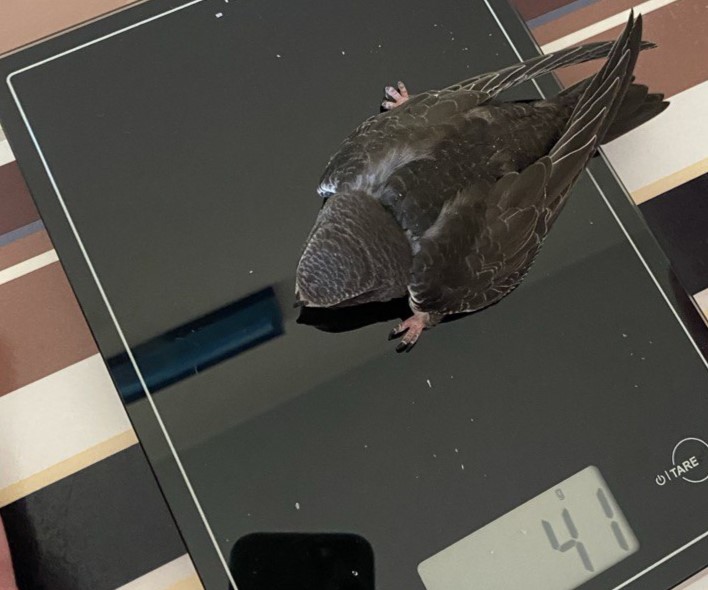
The weight of a healthy swift, including a chick older than 10 days, is 35 grams or more.
The critical weight for a chick's survival is 22-18 grams. For an adult bird, the critical weight is below 30 grams.
Exhausted foundlings usually weigh 20-27 grams.
First of all, you need to find out the swift's exact weight using electronic scales (kitchen or jewelry scales). You need to know the weight to within 1 gram. A scale deviation of even +/− 10 grams is not acceptable, so mechanical scales with approximate readings are not good enough.
If you do not have scales at home and cannot borrow any, you can discreetly weigh the swift at a self-service scale in a shop. Put the swift in a small box and weigh it together with the container. Then weigh the box separately and subtract that weight from the total. The urgency of further action will become clear from how the bird's weight changes over time.
Mouth color
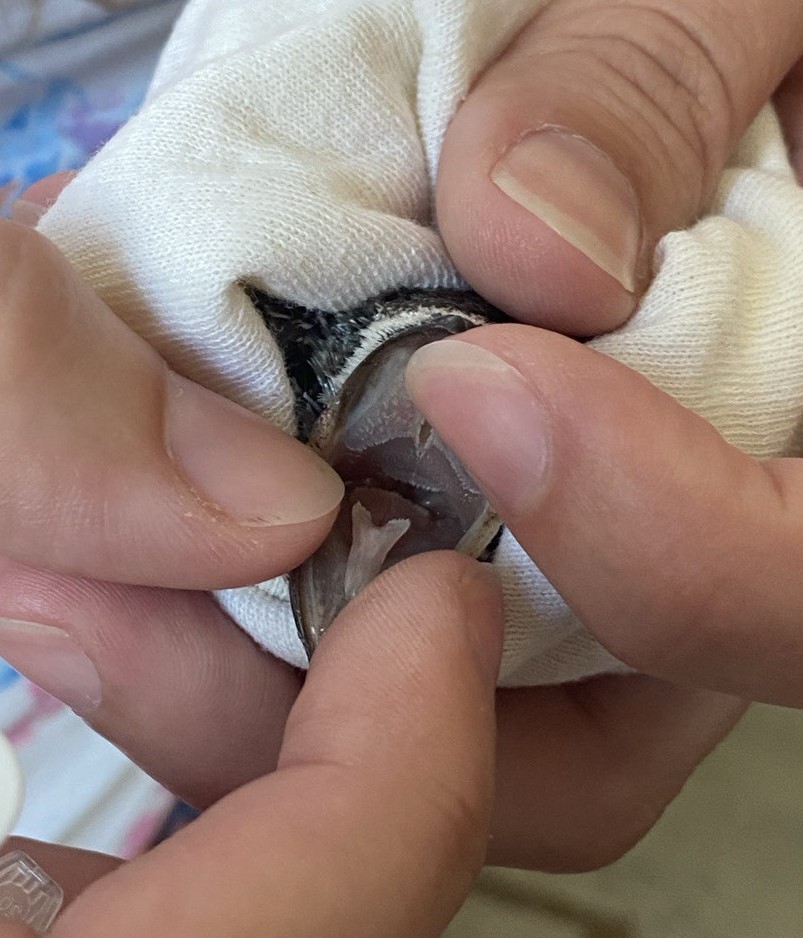
What color is the inside of the mouth?
-
Bright pink
Normal mucosa. The chick is well nourished.
-
Pale pink
The chick is weakened, but not dying.
-
White, yellow, gray
The chick is dying.
Attention! You must not open the mouth by pulling at the tips of the beak! There is a high risk of breaking the beak. Hold the swift's head from the sides with the fingers of one hand, and with the other hand take hold of the skin under the beak (not just the feathers, but the feathers with the skin) and pull downward so that the beak opens slightly. The open beak can be held in place with a finger. Do not squeeze the beak from the sides, as this injures the joint.
Eyes
Are they open more often or closed? If the swift opens them, does it open them fully (wide and round)? Or only halfway, so the eyes seem half-closed? Check against the growth chart: eyes can only be wide open in a swift older than two weeks.
-
Normally open eyes
The chick is fine.
-
Tightly closed eyes
The swift is weakened.
-
Sunken eyes (sometimes it seems as if there are no eyes at all, they look so dry)
The chick is severely exhausted.
Swift droppings
Normal bird droppings consist of three parts: feces, urates, and urine. The white part is what the kidneys excrete: urine and urates. The dark part is chitin residue and digested insect remains from the digestive tract.
-
Droppings in exhaustion
Something black and smeared. And there is very little of it. The puddle around it may be green. In birds, gastric juice is green, and a green puddle in the droppings tells us that there is nothing in the stomach to digest.
-
Good droppings
A large puddle around the capsule indicates excess water in the food
-
Ideal droppings
A well-formed white capsule that does not spread, with a small black tail
Interesting fact: capsule-shaped droppings are used by the chicks' parents to remove them efficiently from the nest.
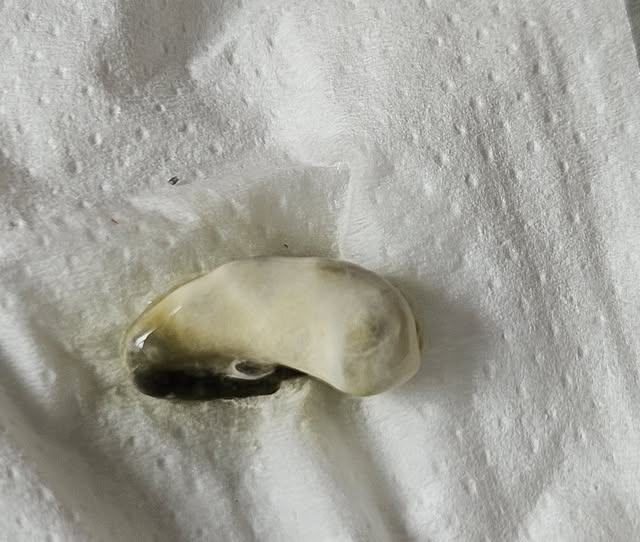
-
Droppings when feeding grasshoppers
The capsule is less defined, the black tail is longer, and there may be a pinkish, reddish, or greenish tint
Other signs of exhaustion
Feet and body are cold; in severe exhaustion they may be icy.
Normally they should be warm or hot, because the body temperature of swifts is higher than that of humans.
An exhausted swift is fluffed up, and the feathers on its back stand on end (this can often be seen in photos)
- Normally the feathers lie smoothly against the body.
Breathing is slowed, like a person breathing slowly, and the back may noticeably rise and fall. If the swift rhythmically opens its mouth with each breath, it is already dying.
- Normally breathing is fast, about twice as fast as in a human, and it is almost impossible to tell from the back that the swift is breathing unless you look very closely.
Resuscitation begins with warming
An exhausted swift cannot warm itself. Any bird gets energy and warmth by digesting food. Even if you put the swift into fur, it will not receive warmth because it would first have to warm that material with its own body.
For warming, use: - your own hands: hold the swift in your palms, press it against yourself, place it inside your clothing against your chest - a hot water bottle - a bottle filled with very warm water and placed inside a sock - an incandescent lamp, directed at the swift from above. Be very careful with a lamp! If the bird has a head injury (hit its head when falling), you must not warm it from above! - an electric heating pad (only on the lowest settings and under your supervision so that the swift does not overheat; use only if there are no other options) - shoe dryers used as a heat source
There must be enough space in the box for the swift to move away from the heat source if it gets too hot.
All liquids and food must be given warm! Warm food is absorbed better, the body needs less effort to digest it, and recovery goes faster.
Hygiene
Before starting resuscitation, as with any action involving a swift, wash your hands thoroughly until squeaky clean and treat them with antiseptic. All tools and items you use must be washed or sterile. Prepare clean tissues, paper towels, and clean dishes.
If a feeder insect falls on the floor, the swift should not be given that insect anymore. Swifts are very susceptible to infections! There is no point in adding more problems to exhaustion.
Use gloves when feeding. The most convenient gloves, which are barely noticeable on the hand and do not get in the way, are nitrile gloves.
Preparing for resuscitation
You will need saline solution or Ringer's solution, because an exhausted swift is primarily severely dehydrated. You can make saline yourself: dissolve one full teaspoon of table salt in one liter of boiled water.
You also need to make honey water at a ratio of 1 teaspoon of honey per glass of boiled water. (Ideally, instead of honey water, use 6% glucose in injection ampoules, but it is sold by prescription.)
Mix the saline with the honey water 1:1. Keep the liquid at about 40 degrees Celsius (very warm, but not hot)
Prepare a syringe without a needle, preferably 1 ml in size, like an insulin syringe.
Cotton swabs and tissues.
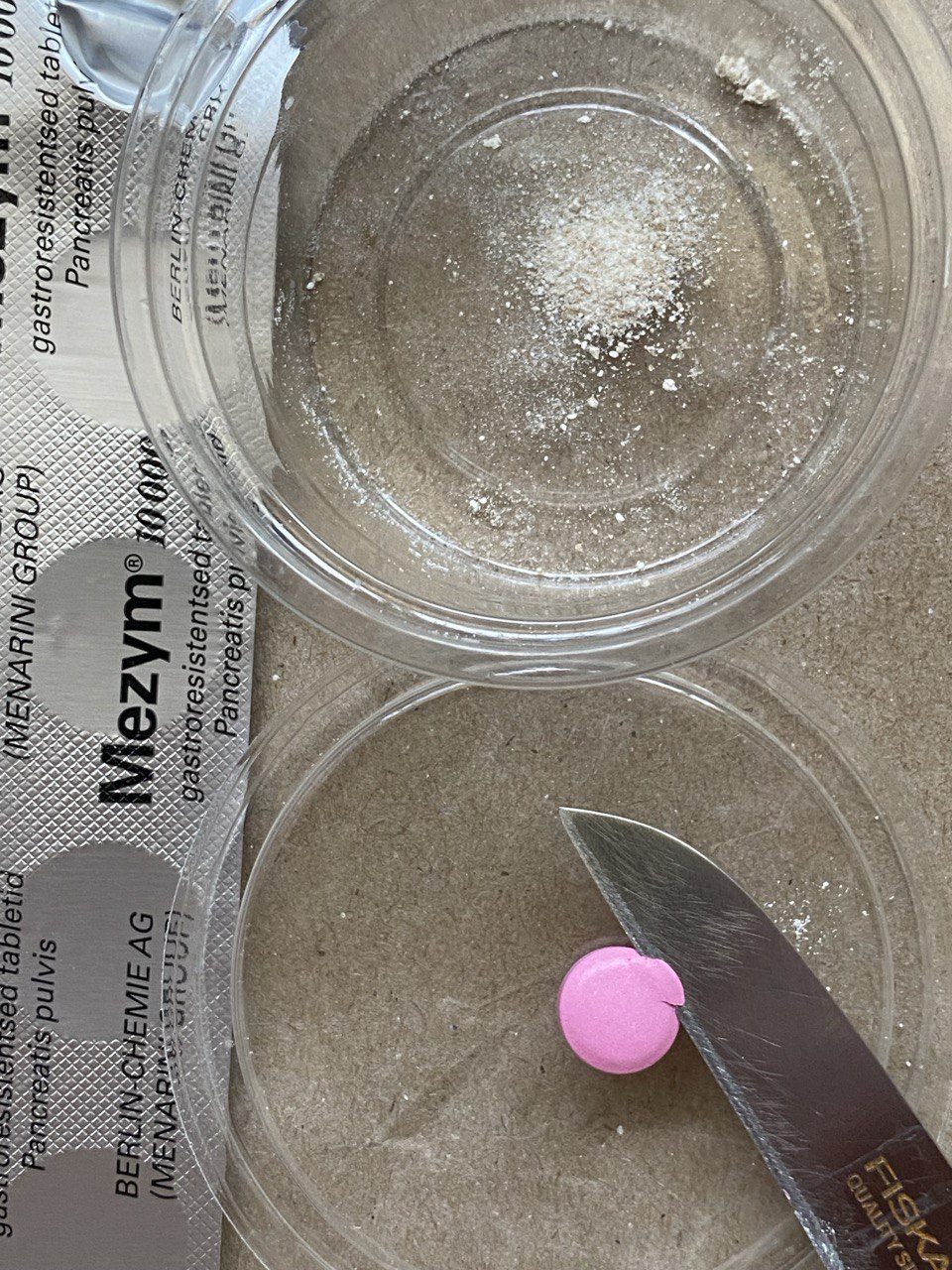
Mezym tablets. Sold in a regular pharmacy, they contain digestive enzymes and help the stomach digest food. Remove the pink coating from the tablet by scraping it off with a knife, then crush the tablet into powder.
Feeder insects, ideally crickets. More details about feeder insects are in the feeding section
Resuscitation
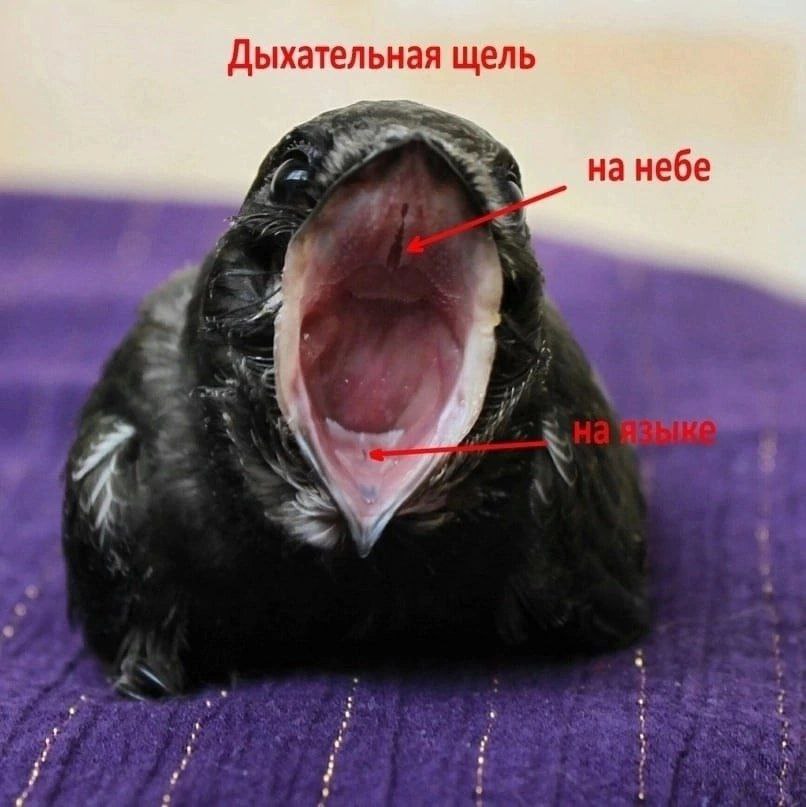
The very first step is to give the swift 0.2-0.3 ml of a 1:1 mixture of saline solution (or Ringer's solution) and honey water into the beak. In drops, this is 5-7 drops. Use a syringe without a needle, give it warm, one drop at a time, making sure the liquid flows into the throat and the swift swallows it. Be very careful with the bird's respiratory openings on the tongue and on the palate! Liquid must not get into them.
To open the beak, hold the swift's head from the sides with the fingers of one hand, and with the other hand take hold of the skin under the beak (not just the feathers, but the feathers with the skin) and pull downward so that the beak opens slightly. The open beak can be held in place with a finger. Do not squeeze the beak from the sides, as this injures the joint. Do not hold the beak by the tips or open it that way, or the lower beak will break.
Wait 20 minutes. The bird must remain warm the entire time. It may be convenient to keep the heating pad on your knees and hold the swift in your hands above it.
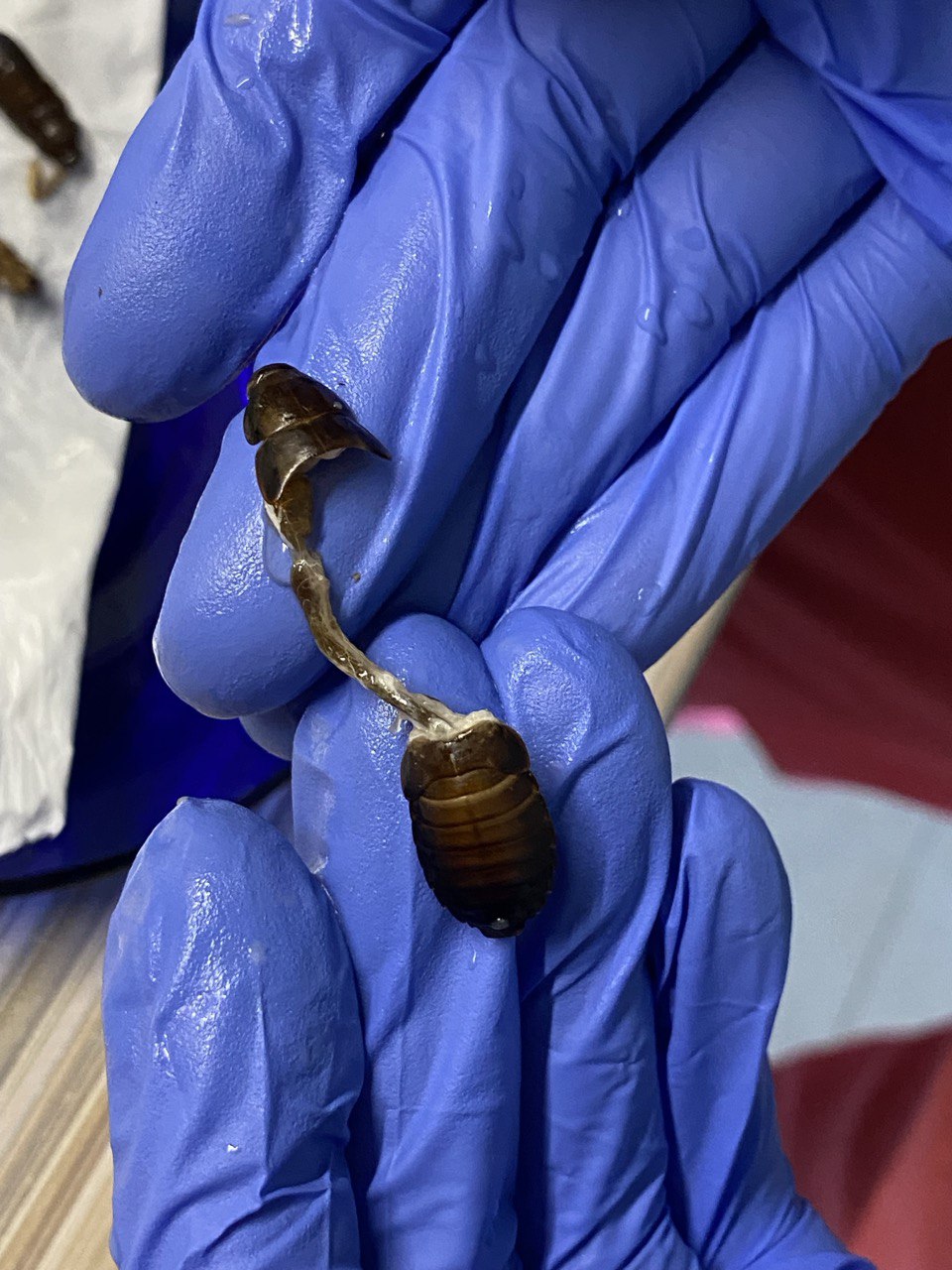
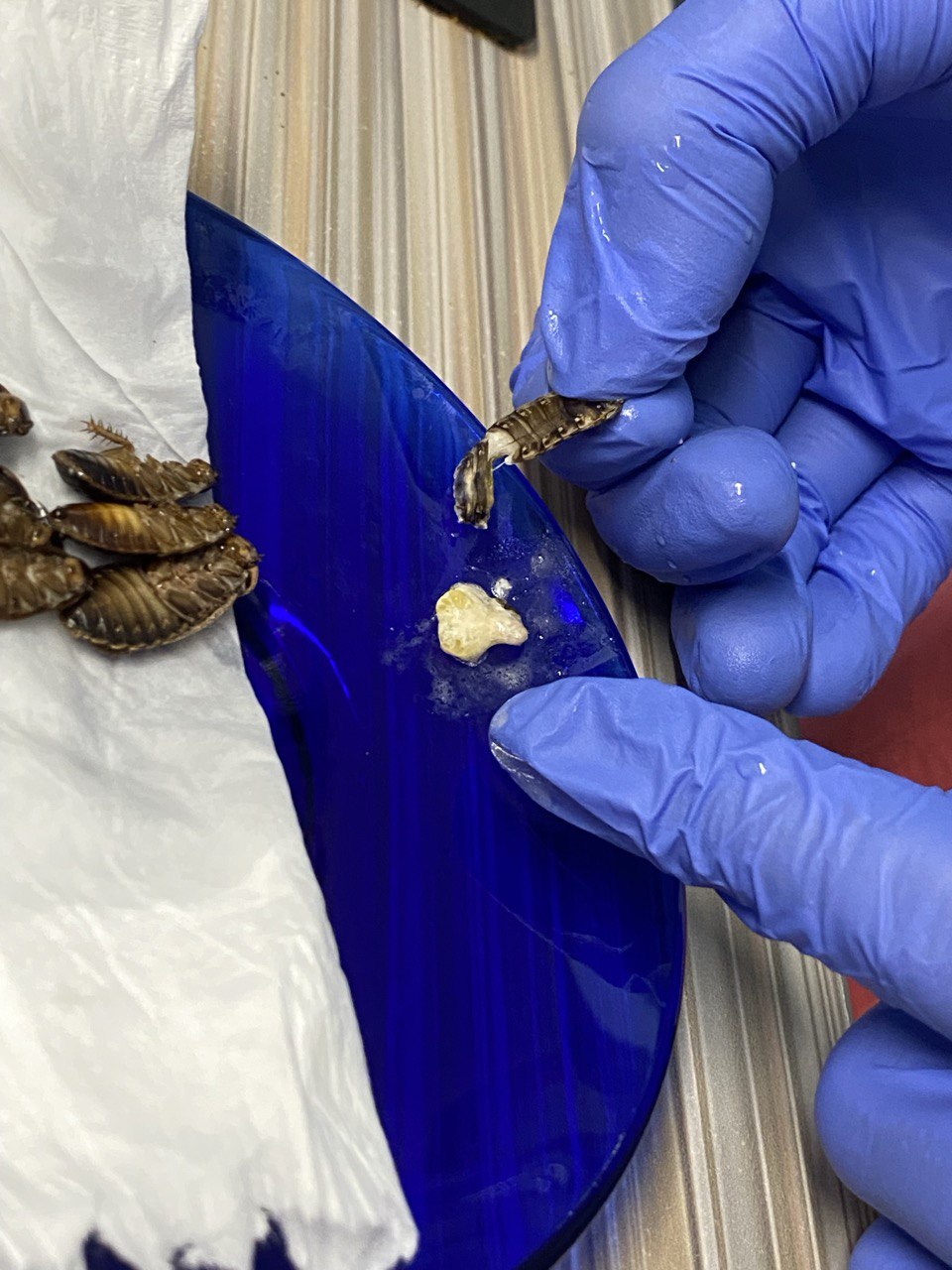
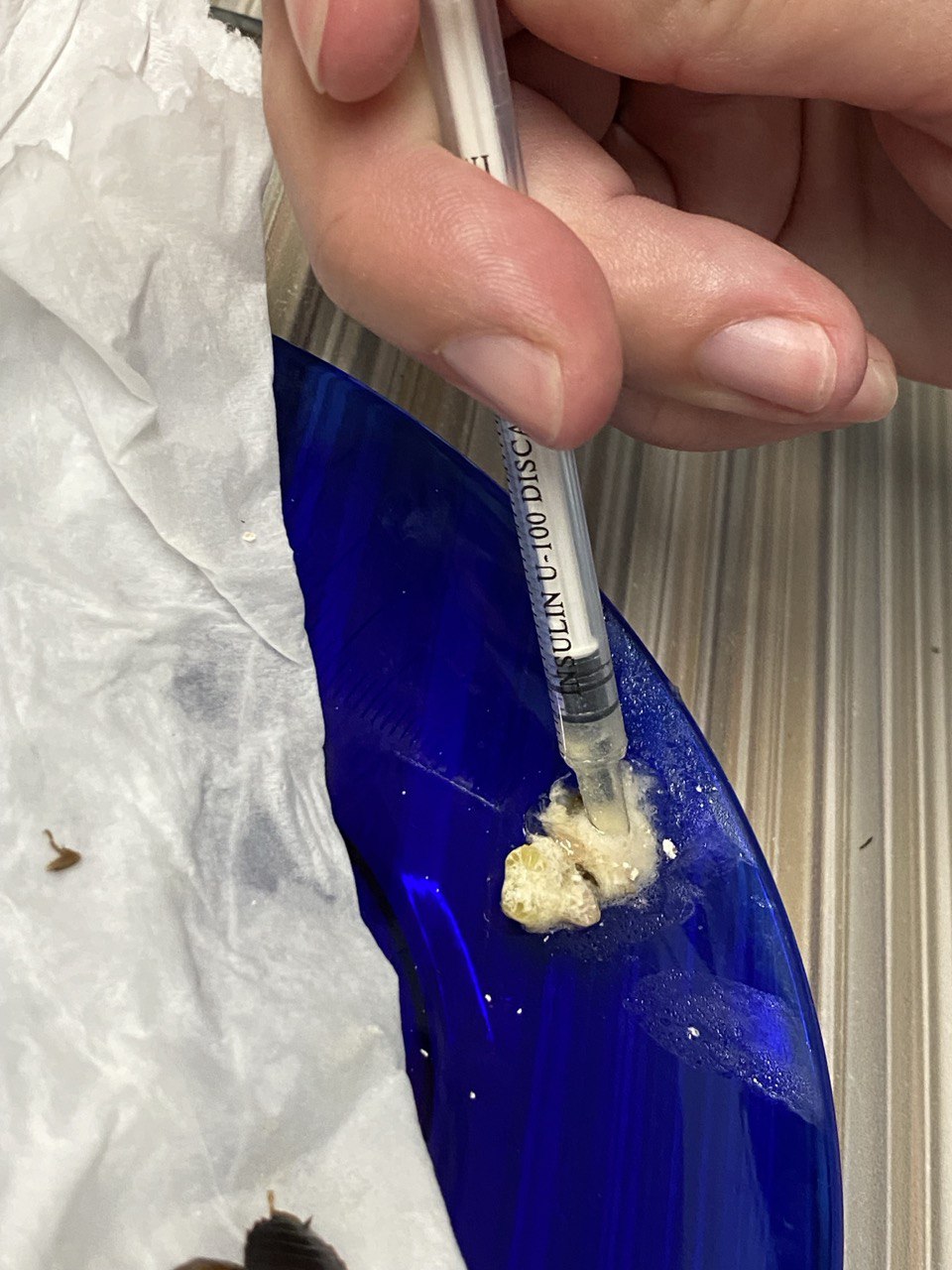
To get the digestive tract working, you need to feed often and in small amounts. Prepare an extract from a cricket or cockroach. To do this, remove the insect's head together with the gut and squeeze the soft contents out of the abdomen. The chitinous shell is too coarse for a bird in critical condition, so do not give it. The larger the insects, the more extract you can get from each cricket or cockroach. You need to collect 0.2-0.25 ml of extract. Add a pinch of Mezym powder about the size of a sesame seed to the portion. Stroke the swift's throat from top to bottom to help it swallow the extract. If the extract seems to be sitting in the throat, you can gently extend the head forward and upward at an angle so that the neck straightens and the extract passes more easily into the esophagus. Keep cotton swabs nearby so you can quickly clear the swift's respiratory openings if liquid food gets into them. Squeeze each drop from the syringe only after the previous one has definitely been swallowed.
If there are no insects, do not replace them with any other food. It is acceptable to keep the swift for 1 day on a 1:1 mixture of saline solution (or Ringer's solution) and honey water. But do not give more than 5 drops per "feeding." The same recommendation applies if you found the swift in the evening and cannot buy anything. Experienced volunteers are better off keeping a supply of necessities at home.
During the first 24 hours, feed only extracts. Make 0.2-0.25 ml insect extracts (2-3 extracts from pre-imago crickets) and feed every 25-40 minutes for the first 5 feedings. After the fifth feeding, droppings usually appear. Once there are droppings, increase the portion to 0.3-0.35 ml (4-5 extracts), and increase the interval to 1 hour for the rest of the day. Night breaks between feedings should be no longer than three hours.
Extract
Preparing an extract with crushed Mezym added, using a marbled cockroach (pre-imago) as an example.
Weight control
Every morning before the first feeding, weigh the swift on an empty stomach. Every day the swift should gain at least 1-1.5 grams. It will gain the first couple of grams in the first hours of resuscitation as dehydration is corrected. After that, the weight should continue to increase until it matches the normal range for the bird's age. It is especially important to feed a chick sufficiently. In a hungry swift chick, the feathers and internal organs develop poorly; there may be feather defects, and feathers may break or fall out. A swift with poor plumage has no chance of surviving in the wild.
Swollen belly
If you are feeding the swift and there are no droppings for a long time, trouble may occur. Droppings should appear after every feeding starting with the fifth one (counting from the moment the belly was empty). Feel the swift's belly (not the breast where the keel bone is, but the belly itself), and if it is hard and swollen, you need to stop feeding until there are droppings. Give 2 drops of vaseline oil with water into the beak. Lubricate the anus with oil. Keep the bird's belly over warmth. Gently massage the belly with a cotton pad.
Finely chopped insects
When the swift's mouth has become pale pink, the insect extracts are being digested, and there are regular droppings, you can begin gradually introducing feedings of finely chopped insects with a feeding interval of 1.5 hours. Finely chopped insects are cricket or cockroach abdomens cut up with manicure scissors.
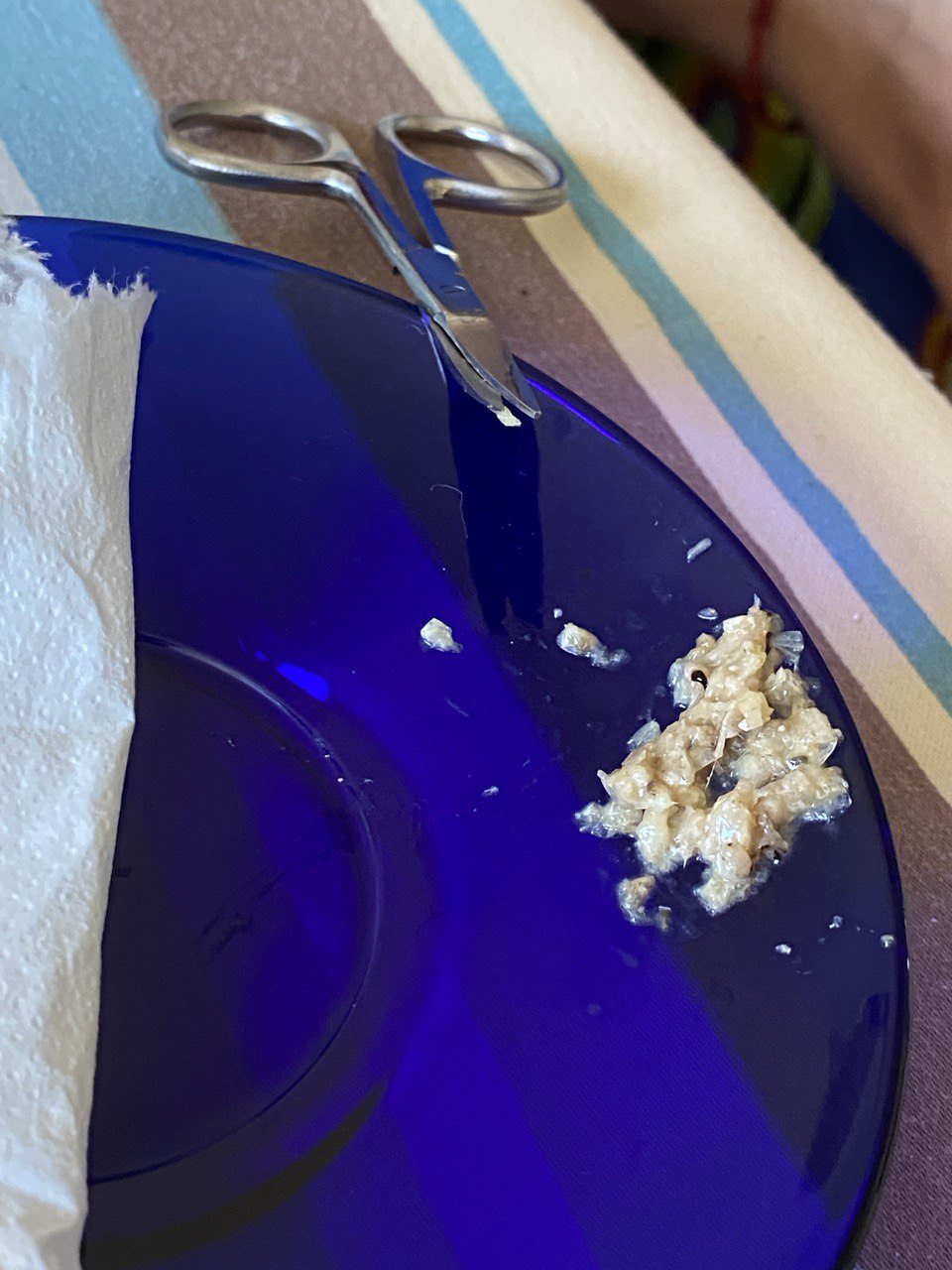
Replace one extract feeding with the same amount of finely chopped insects. Continue adding Mezym powder. If the droppings are normal, and there are no undigested remains in them or only very few, then the swift has coped with digestion, and you can replace two extract feedings with the same amount of finely chopped insects. The transition to chopped insects can be stretched over the whole day or even a couple of days, gradually increasing the amount of chopped insects per feeding and smoothly moving the swift to feeding only chopped insects.
Inspect the swift's mouth after feeding to make sure the respiratory openings are clear! Tiny pieces of chopped chitin can stick to the palate or get into a respiratory opening.
Feeding whole abdomens
Introduce whole, uncut cricket abdomens gradually as well. Give 2-3 abdomens together with the chopped insects and see what the droppings are like, whether the uncut food is being digested. If it is not being digested, then it is too early to give abdomens. If the swift vomits, do not feed abdomens anymore and go back to feeding extracts. If the swift did not vomit, the crickets were digested, and the swift defecated after an hour, then you can feed again, gradually increasing the portion by 2-4 abdomens until you reach a normal age-appropriate portion.
August is the month of abandoned and exhausted swift chicks
The flock leaves for the south in early to mid-August, and some chicks remain sitting in their nests underfed. Usually these are late chicks, when something happened to the first clutch and the parent swifts laid eggs again. The chicks wait one day, two days, a week... and then they can no longer hold on and set out to search for food on their own. That is when they are picked up from the ground.
The keel is sharp and thin like plywood, the eyes are closed and sunken, the mouth is pale pink or white, and the weight is 20-24 grams.
The volunteer needs special persistence, quick decision-making, and readiness for difficulties. Time is measured not in hours, but in minutes! If urgent action is not taken, the chick dies within 24 hours. Resuscitated swift chicks gradually recover and reach normal weight and development, and can potentially return to the wild.